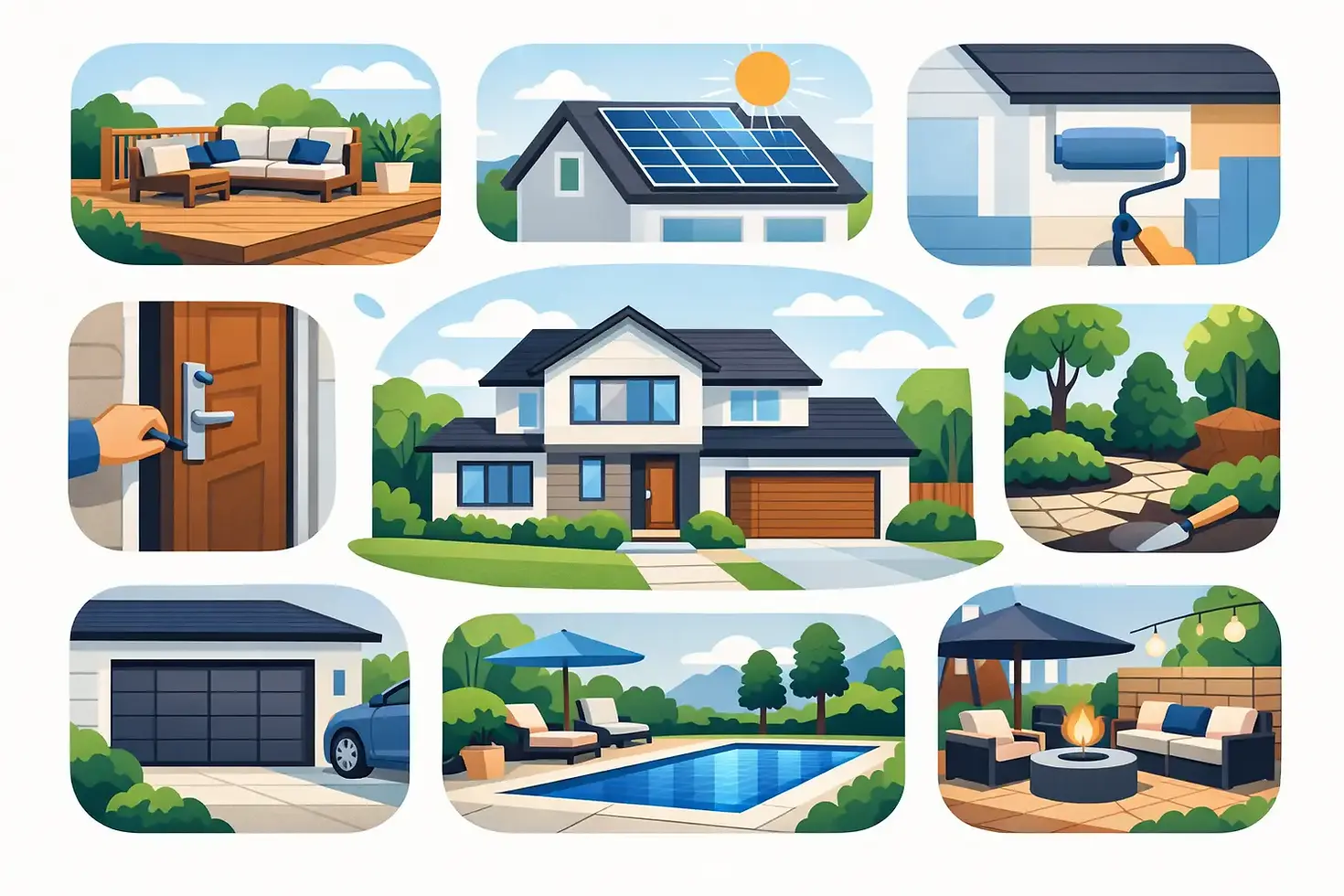
8 Best Exterior Home Improvements

When homeowners ask about the best exterior home improvements, they are usually trying to solve more than one problem at once. They want the home to look better, hold up better in the weather, and make sense as an investment. In Southwest Washington, where rain, moisture, and seasonal wear can take a real toll, the right exterior upgrades need to do all three.
The best projects are not always the flashiest ones. A beautiful new front entry can make a strong first impression, but if siding is failing or drainage is pushing water toward the foundation, those issues deserve attention first. A smart exterior improvement plan starts with condition, then moves to function, and finally to appearance.
What makes the best exterior home improvements worth it?
A worthwhile exterior project usually improves at least one of these areas: protection, performance, appearance, or resale value. The strongest upgrades often improve several at the same time. New siding protects the structure and refreshes the look of the home. Window replacement can improve comfort, energy efficiency, and curb appeal. A well-built deck expands how you use the property and makes outdoor space feel more intentional.
That said, value depends on timing and execution. If a project is rushed, mismatched to the home, or built with short-term materials, even a big investment can underperform. Homeowners tend to get the best results when upgrades are selected with the whole property in mind rather than as isolated cosmetic fixes.
1. Siding replacement or repair
Siding is one of the most practical exterior improvements because it affects both appearance and protection. If boards are warped, cracked, soft from moisture, or simply showing their age, replacement may be more cost-effective than repeated patching. Even targeted repairs can make a noticeable difference when damage is limited to one elevation or section.
For homes in the Kelso area and throughout Cowlitz and Clark County, material choice matters. Some homeowners prioritize low maintenance, while others want a specific architectural look. The right answer depends on your budget, the style of the home, and how long you plan to stay. What matters most is proper installation, moisture management, and trim details that keep water where it belongs.
2. Roofing upgrades
A roof rarely gets called exciting, but it is one of the best exterior home improvements if your current system is nearing the end of its life. A worn roof can lead to leaks, insulation problems, interior damage, and ongoing maintenance costs. Replacing it before failure is often far less expensive than dealing with the aftermath of water intrusion.
Roofing also has a strong visual impact. The color, profile, and condition of the roof influence how finished the entire home looks from the street. If the roof is streaked, curling, or uneven, it can make the whole property feel older than it is.
This is one of those projects where cutting corners tends to show up later. Good underlayment, flashing, ventilation, and workmanship matter just as much as the shingles themselves.
3. New windows and exterior doors
Old windows and doors can make a house feel drafty, dated, and harder to maintain. Replacing them improves more than appearance. It can help with comfort, energy efficiency, outside noise, and everyday usability.
Front doors deserve special attention because they shape the first impression of the home. A new entry door, sidelights, updated trim, and quality hardware can transform the look of the facade without changing the entire exterior. Patio and back doors matter too, especially when they connect the home to a deck, yard, or outdoor living area.
Window replacement is more of a judgment call. If your windows are structurally sound, repairs or selective replacement may be enough. If seals are failing, frames are deteriorating, or the style is dragging down the home, a full upgrade often makes more sense.
4. Decks, porches, and covered outdoor spaces
Exterior improvements are not just about the front of the house. One of the most useful upgrades for many homeowners is creating better outdoor living space. A deck, porch, or covered patio can make the backyard more livable and extend how the home functions for family time, entertaining, or simply enjoying the property.
The best results come from designing these spaces as part of the home rather than as afterthoughts. Size, access points, railings, stairs, lighting, and roof coverage all affect whether the finished space feels inviting or awkward. In a climate with regular rain, a covered area often delivers more day-to-day value than an open platform alone.
This is also where craftsmanship really shows. Framing, finishes, drainage, and integration with the existing structure need to be handled carefully for the space to last.
5. Exterior paint and trim work
Paint is often seen as a cosmetic project, but on many homes it is also a maintenance project. Failing paint exposes trim, siding, and other surfaces to moisture and sun damage. Fresh exterior paint, paired with trim repair where needed, protects the home and makes it feel cared for.
Color selection matters, but prep work matters more. Scraping, repairing damaged sections, caulking, priming, and applying the right coatings are what determine how well the finish holds up. A rushed paint job may look good for a season and then start to peel or fade.
If the home has good bones and the exterior materials are still in solid condition, paint can be one of the most cost-effective ways to improve curb appeal. If surfaces are already failing, though, paint alone will not solve the underlying problem.
6. Entry upgrades and curb appeal improvements
Sometimes the highest-impact change is not the largest one. Improving the front entry area can give the house a more welcoming, finished appearance without requiring a full exterior overhaul. This might include replacing the front door, upgrading porch posts or railings, widening a walkway, installing better lighting, or improving steps and landings.
These projects work especially well when the home already has a solid exterior envelope but lacks definition or character from the street. A clean, well-designed entry makes the property feel maintained and intentional.
Landscaping can support this effort, but hardscape and construction details usually create the long-term structure. Homeowners often get better results when they improve the permanent elements first and then layer in plantings and decorative touches.
7. Garage door replacement
A garage door takes up a surprising amount of visual space on many homes. If it is dented, outdated, or poorly matched to the house, replacing it can change the look of the entire front elevation.
This upgrade also improves day-to-day function. Newer garage doors can be quieter, better insulated, and more reliable. For attached garages, that insulation can make a difference in adjacent living spaces.
Style matters here. The right garage door should fit the architecture of the home instead of competing with it. Window placement, panel design, color, and hardware should all feel consistent with the rest of the exterior.
8. Drainage and water-management improvements
Not every exterior project is meant to be noticed. Drainage upgrades may not get compliments from the street, but they can be among the most important investments a homeowner makes. If water is collecting near the house, overflowing from gutters, or damaging lower siding and trim, appearance is only part of the issue.
Proper grading, gutter replacement, downspout extensions, and related drainage corrections help protect foundations, crawl spaces, siding, and landscaping. In our region, where persistent moisture is part of homeownership, these improvements are often the difference between an exterior that lasts and one that keeps developing expensive problems.
If you are choosing between a visible upgrade and a water-management fix, the right answer is usually the one that protects the structure first.
How to prioritize the best exterior home improvements for your home
The best plan starts with an honest look at condition. If the roof, siding, windows, or drainage system is compromised, those issues should move to the top of the list. Once the home is protected, it makes more sense to invest in appearance-driven upgrades that build on that foundation.
Budget also plays a role. Sometimes a phased approach is the smartest choice. You might address necessary repairs this year, then schedule a front entry refresh or outdoor living project next. Done thoughtfully, phased work can still produce a cohesive result.
It also helps to think about your goals. If you plan to stay long term, prioritize comfort, durability, and low maintenance. If resale is part of the equation, focus on upgrades that improve curb appeal and signal that the home has been well cared for. The two goals often overlap, but not always.
For homeowners who want a dependable result, the biggest advantage comes from working with a contractor who can look at the entire property, identify the real priorities, and manage the work with clear communication. That is where experience matters. Companies like RL DOLE LLC understand that exterior improvements are not just about making a house look better for now. They are about protecting your investment and delivering work that holds up over time.
A good exterior project should leave you with more confidence every time you pull into the driveway - not just because the home looks better, but because you know it was improved the right way.


Comments